

New One offers ten courses to choose from, five offered each term. Please note that the only requirement to take New One courses is that you need to be a first-year student at U of T. If you are interested in any of the courses below, you can enrol on them when you register for your other classes in late July. Please, note that courses fill up fast. It is better to register and then drop later if you decide you cannot take the course.
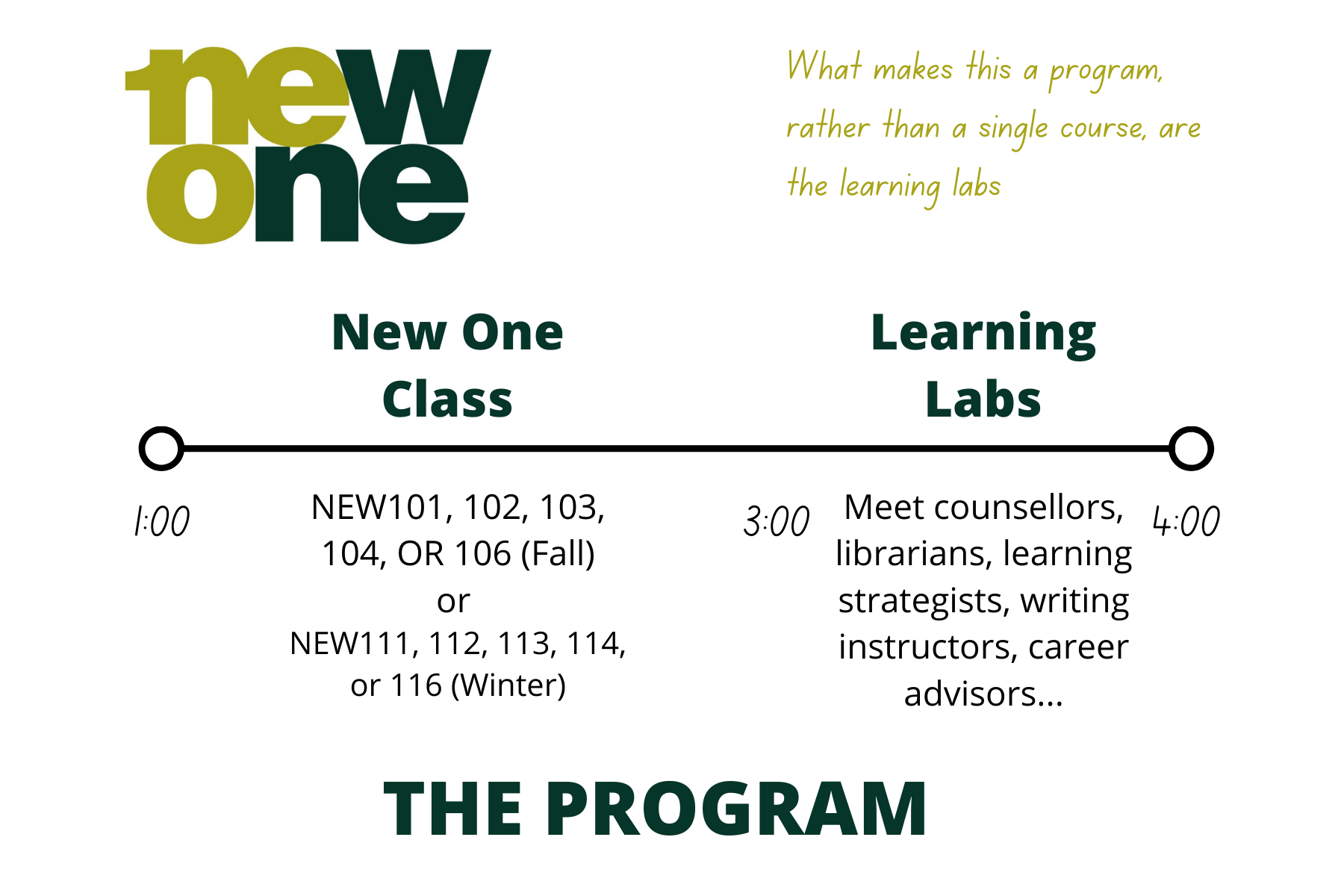
Each class meets for two hours each week with a third hour dedicated to a learning lab (see below).
Course Topics
Fall Term
NEW101H1F – The Everyday Politics of Food
How often do we reflect on the environmental, social, and economic impact of our everyday food choices? This course offers an introduction to the key concepts, terms, and theories that underlie our current food system. The course links the food we eat to global forces and considers how these forces affect food distribution, access, and consumption.
NEW102H1F – Exploring the Multilingual City
How does language connect and divide people, places, and communities? This course considershow interactions between people in complex cities like Toronto are shaped by language as well as Colonian history, economy, architecture, and urban landscapes. Students engage with the city both inside and outside the classroom to think about a range of questions linked to gender and sexuality, indigeneity, migration, race, ethnicity, and public/private space.
NEW103H1F – Digital Technology, Society, and Power
Our world depends on the digital. We communicate and interact with friends via chats, videocalls and social media; we purchase items, we play, we trade online etc.. In this course, we will examine what makes digital technologies so crucial today and how and why they are such a central item in our lives. Importantly, we will question their alleged neutrality, by reflecting on who benefits from them and who owns them; how they are important instruments of power; how they can be used to manipulate and mislead; how they are implemented to exclude and to make visible.
NEW104H1F – Creating Community: Art, Identity and Belonging
How is art implicated in the process of community building? How does art foster a sense of community identity and belonging? This course explores how communities, in Toronto and beyond, engage a variety of art forms including graffiti, spoken-word, hip-hop, digital art, traditional dance, and music to connect people and express community identity. Students will have the opportunity to visit community arts projects.
NEW106H1F – Science, Health, & Social Justice
How can scientific knowledge and research be mobilized to impact individual and global health? How is health impacted by social, racial, and economic inequalities? This course explores scientific research and practice with special attention to the translation of scientific knowledge in the public sphere, and its ability to inform policies, practices and laws. Students have the opportunity to meet clinician-scientists, policy-makers, and other professionals connected to the health care system.
Winter term
NEW111H1S – Food, Ethics, and Sustainability
How do digital technologies work? What is their material and structural impact on the environment, and on the cultural-economic fabric of the world? How have digital technologies come to dominate entire sectors in science and medicine, urban planning and the arts? We will reflect on the way digital technologies intersect with other technologies and with the physical world, how they complement other pre-existing technologies, and how they simultaneously evoke futuristic, fantastic, scary and poetic narratives.w students to focus on an issue of particular interest.
NEW112H1S – Language Freedom and Power
How do we imagine a balance between the need for communication, freedom of expression, and protection for marginalized groups? This course considers how language shapes and is shaped by the relations of power not only in such sites as colonies, nations and institutions, but also in popular culture and how we communicate online. It explores the key role of language in activism and youth cultures and allows students to focus on an issue of particular interest.
NEW113H1S – Unpacking Digital Technology
What are the social and material implications of the digital technologies we use every day – for the present and for the future? This course explores how digital technologies have been remaking the world and affecting our lives by tracing their historical development, their social effects, and the impact of their physical presence. It also peers into scenarios of the future in this digital world. Students engage in research on a topic of their own interest.
NEW114H1S – Art for Social Change
How does art contribute to social change? Artistic productions can draw attention to social problems, mobilize support for and symbolize social movements, and inspire new visions for imagined futures. This course will explore case studies of the role of various art forms in relation to past and current social change initiatives. Students will have the opportunity to engage in research on an art project of their choice.
NEW116H1S – Science and Global Threats
What is the role of science in addressing current global threats? What are the possibilities and the limitations of scientific research and knowledge in tackling complex problems such as climate change, pandemics, and pollution? In this course, students explore these questions by examining case studies, meeting with specialists in various scientific fields, and engaging in research on a topic of their choice.
Learning Labs
The Learning Labs are workshops in which we bring all the resources the university has to offer directly to you. In the spirit of New College’s Social and Environmental tradition, we offer workshops and plenary with experts, community leaders and artists to reflect together on today’s world issues.
These are some of the workshops we have had:
Navigating Academia
- 5 Ways to Mental Wellbeing
- Transitioning to University
- Intro to Research + Using Library Databases
- Productive Failure – Handling the Dreaded Midterms
- What Should you Know about Career Planning in First Year?
- Reading and Taking Notes from Research
- Using Zotero for Research
Plenary Events and interdisciplinary initiatives
- Community Fair
- Mapping “cheapness” in Toronto
- Archemy: using chemistry against gun violence
- Urban Pictograms. How do you imagine the city?
- All my relations with Carolynne Crawley
- Decolonial and interdisciplinary approaches to art, science and technology
- I don’t do Math
for a description and documentation of the New One vents, please click here